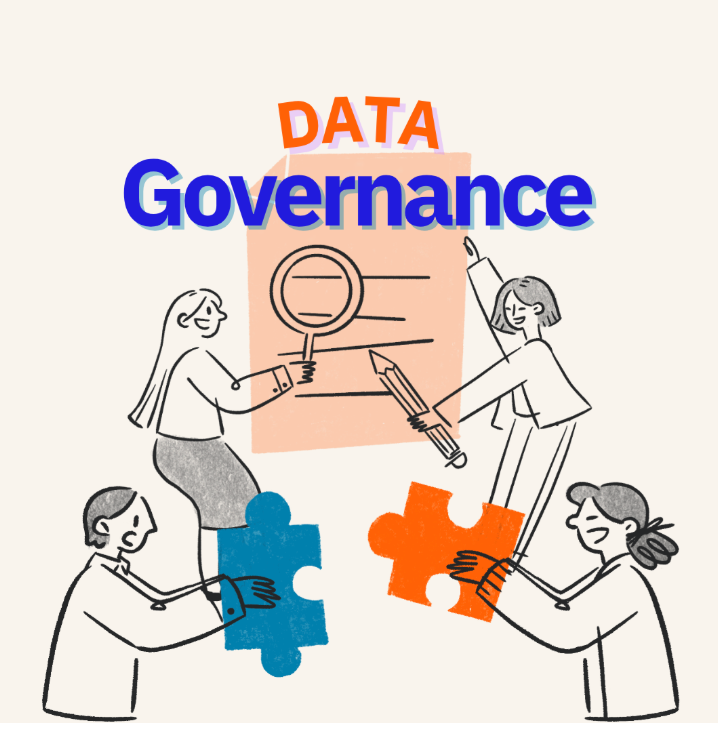
Executive Summary
- Data Governance is a key component of systematic data management, ensuring that data is high-quality,
secure, and ready to support strategic decision-making.
- Its implementation encompasses various aspects, including establishing governance structures, formulating
policies and regulations, conducting audits and evaluations, and leveraging technology to support effective
data management.
- In Thailand, Data Governance practices are guided by the Digital Government Standards developed by the
Digital Government Development Agency (DGA).
- Organizations that should implement Data Governance include both public and private sector entities that
rely on data as a core part of their operations, in order to enhance data quality and overall performance.
In today’s digital era, data has become one of the most valuable resources. Organizations around the world are
rapidly transforming into data-driven enterprises, harnessing information to power deep analytics, artificial
intelligence (AI) development, and comprehensive digital transformation. Every day, an enormous amount of data
is generated — growing exponentially in both volume and complexity.
However, having “a lot of data” does not necessarily mean having “good data.” Without proper management, data
can become duplicated, inaccurate, or insecure, ultimately hindering decision-making rather than enhancing it.
This is where Data Governance plays a crucial role — ensuring that data is well-organized, high-quality, secure,
and ready to support effective and sustainable strategic decisions.
Definition of Data Governance
Data Governance is the process of defining the rights, responsibilities, and accountability of all parties
involved in managing data at every stage. It includes establishing policies and rules for accessing and
utilizing data, as well as implementing technological tools for data management. The objective is to ensure that
an organization can handle and use data accurately, completely, and up-to-date, while also enabling efficient,
secure, and reliable data connectivity, exchange, and integration.
Data Governance Operating Framework
The Data Governance Operating Framework does not follow a one-size-fits-all model. It must be tailored to align
with the unique context and characteristics of each organization, whether in the public or private sector, as
well as the nature of its industry. Factors such as organizational structure, data systems and sources, industry
standards, and relevant legal or regulatory requirements all play a role in shaping how Data Governance is
implemented.
The goal is to ensure that data management effectively supports the organization’s strategic objectives. In
general, a Data Governance framework typically encompasses the following key components:
- Establishing a Data Governance Structure: Clearly define roles, responsibilities, and
accountability across the organization. This includes forming a Data Governance Council to set direction and
policy, establishing data stewardship teams, and identifying key data stakeholders such as data creators,
data owners, and data management teams.
- Defining Data Policies, Standards, and Management Processes: Develop comprehensive policies
that cover the entire data lifecycle. These policies ensure that all stakeholders understand their roles at
each stage, promoting systematic, transparent, and auditable data operations.
- Implementing Monitoring and Evaluation Mechanisms: Since Data Governance is an ongoing
process rather than a one-time initiative, regular monitoring and evaluation are essential. Organizations
should establish Key Performance Indicators (KPIs) to assess the effectiveness, compliance, and alignment of
their Data Governance practices with overall organizational goals.
- Utilizing Data Management Technologies: Employing integrated data management tools and
platforms enables personnel to perform Data Governance tasks efficiently and consistently. Such tools
support adherence to defined policies, standards, and regulatory requirements, while enhancing overall data
quality and accessibility.
Benefits of Implementing Data Governance
- Ensures Data Privacy and Security: Organizational data is protected in compliance with
relevant laws, regulations, and standards, ensuring confidentiality and preventing unauthorized access.
- Improves Data Quality and Reliability: Data becomes accurate, consistent, and trustworthy,
allowing for effective analysis, decision-making, and business innovation.
- Builds Stakeholder Trust: Strong Data Governance fosters confidence among
stakeholders—including executives, employees, and customers—by demonstrating accountability and transparency
in data management.
- Enhances Operational Efficiency: Data is managed systematically and consistently across the
organization, enabling seamless data sharing, reducing redundancy, and improving collaboration and
performance across departments.
Standards for Data Governance Implementation in Thailand
Data Governance practices in Thailand are guided by the “Digital Government Standards (DGS)” developed by the
Digital Government Development Agency (DGA). These standards align with Section 12 of the Digital Government
Administration and Service Act B.E. 2562, which mandates that government agencies implement Data Governance to
ensure efficient, transparent, and integrated data management and service delivery.
Government agencies are also required to adhere to the principles of public sector Data Governance as outlined
in Section 8, following guidance from DGS 6: 2566–Digital Government Standard Data Governance Framework
(Revised: Guideline). Additionally, government agencies undergo annual assessments of Data Governance readiness
conducted by the Digital Government Development Agency.
These Digital Government Standards are based on the DAMA-DMBOK2 (Data Management Body of Knowledge) framework,
an internationally recognized reference for data management. The DAMA-DMBOK2R provides principles and best
practices that serve as a standard for data management, applicable to both public and private sector
organizations. It covers key aspects of data management, including Data Governance, Data Ethics, Data
Architecture, Data Modeling, Data Quality Management, and other related areas.
Which Organizations Should Implement Data Governance
- Public sector agencies: Need to adopt Data Governance to ensure transparent and efficient
administration, in compliance with the Digital Government Administration and Service Act B.E. 2562 and
aligned with Thailand’s 20-Year National Strategy. Government agencies are expected to achieve full
implementation of Data Governance by 2027.
- Private sector organizations: Particularly those that leverage data for strategic
decision-making or policy development, such as data-driven companies, should also prioritize systematic data
management. This ensures stakeholder and consumer trust while enhancing operational efficiency.
- In summary, any organization that uses data in its operations should establish a Data Governance system to ensure that data is high-quality, secure, and capable of generating sustainable value.
Examples of Organizations Successfully Implementing Data Governance
-
National Science and
Technology Development Agency (NSTDA), Thailand: NSTDA received the Government Data Governance
Quality Award in 2023 and 2024 for its outstanding performance in data sharing, open data, and effective
data-driven analytics.
-
JPMorgan Chase: One of the world’s largest financial institutions, JPMorgan Chase
has implemented a robust Data Governance system to enhance data quality and security, improve financial risk
management, ensure regulatory compliance, and build trust with customers globally.
💡 If you are seeking to deepen your understanding of Data Governance
Athentic Consulting is ready to share its experience and provide approaches tailored to your organization’s specific context—from laying a strong foundation for data governance to strengthening and enhancing existing processes in a sustainable manner. Our consulting team is committed to supporting organizations in leveraging data effectively and securely, while also delivering end-to-end data management platform development services that comply with relevant laws and standards. With a dedicated team of system developers and data experts providing continuous support, we enable organizations to confidently and sustainably drive data-driven decision-making.
📩 Contact us: https://www.athenticconsulting.co.th/
📞 Phone: 02-615-0125